
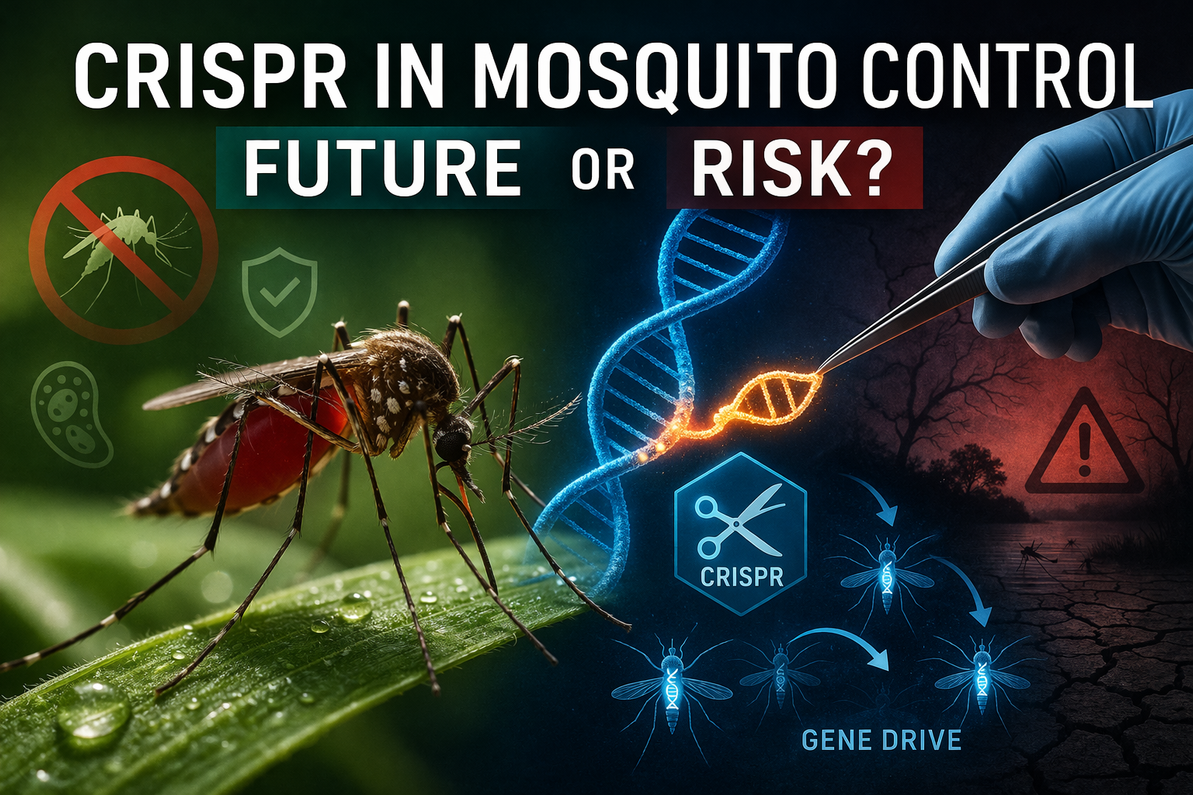
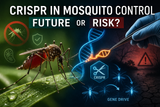
CRISPR in Mosquito Control: Future or Risk?
CRISPR in Mosquito Control: Future or Risk?
Mosquitoes are more than just annoying summertime pests they are vectors for deadly diseases like malaria, dengue, Zika, and yellow fever. Traditional control methods, including insecticides and bed nets, have saved millions of lives, but mosquitoes are evolving resistance, and new solutions are needed. One of the most exciting and controversial approaches is CRISPR-based gene editing. But is this the future of mosquito control, or a risky experiment with unknown consequences?
What Is CRISPR and How Can It Target Mosquitoes?
CRISPR-Cas9 is a powerful gene-editing tool that can precisely modify DNA. In mosquitoes, scientists can use CRISPR to:
-
Reduce fertility: Introduce genes that make mosquitoes unable to reproduce effectively.
-
Spread disease resistance: Modify mosquitoes so they can no longer carry pathogens like the malaria parasite (Plasmodium).
-
Gene drives: Use CRISPR to ensure a trait spreads rapidly through a population, potentially reducing or replacing entire mosquito populations.
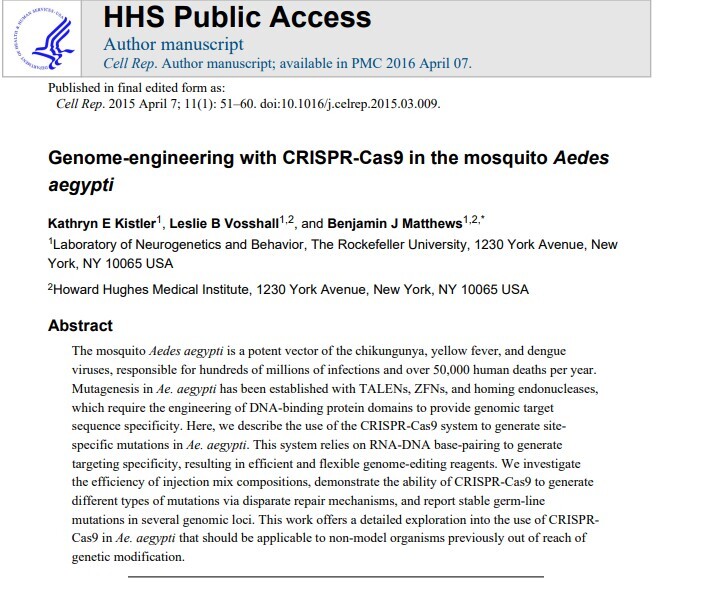
 Generating mutant Aedes aegypti mosquitoes using the CRISPR/Cas9 system
Imagine a mosquito population where almost all individuals carry a gene that prevents malaria transmission that’s the promise of CRISPR.
Potential Benefits
-
Targeted Control: CRISPR can focus on specific species without affecting other insects, unlike broad-spectrum insecticides.
-
Sustainable Disease Reduction: If a gene drive works, it could reduce disease transmission for decades with minimal human intervention.
-
Environmentally Friendly: Less chemical use could mean fewer toxic residues in water and soil.

Genome Engineering with CRISPR-Cas9 in the Mosquito Aedes aegypti
Potential Risks and Concerns
While CRISPR holds promise, it is not without challenges and ethical concerns:
-
Unintended Ecological Effects: Mosquitoes play roles in ecosystems, such as pollination and food for other species. Eliminating them could disrupt ecological balance.
-
Gene Drive Spread: Once released, gene drives may cross borders and affect mosquito populations worldwide, making recall impossible.
-
Resistance Development: Just like insecticides, mosquitoes could evolve resistance to CRISPR-based modifications.
-
Ethical Questions: Is it acceptable to deliberately drive a species toward extinction? Who decides which populations can be modified?
Current Research and Trials
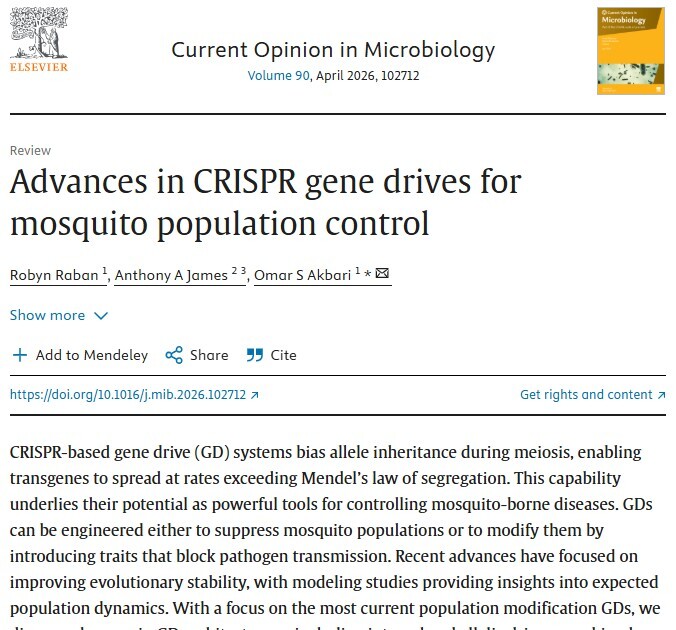
Some CRISPR-based mosquito trials are underway, mainly in contained laboratory settings. For example:
-
Anopheles gambiae, the main malaria vector in sub-Saharan Africa, has been modified to carry a gene drive that reduces female fertility.
-
Researchers are exploring “self-limiting” CRISPR systems that eventually disappear from the population to reduce ecological risk.
These early experiments are promising, but widespread deployment is still years away.
Balancing Future Promise with Risk
CRISPR offers a revolutionary approach to controlling mosquito-borne diseases, but scientists emphasize caution. The potential to save millions of lives is enormous, yet the ecological, ethical, and social implications are equally significant. Any real-world application must be carefully tested, monitored, and regulated internationally.
Conclusion
CRISPR-based mosquito control could be the future of disease prevention, offering targeted, sustainable solutions. At the same time, it presents real risks that demand careful consideration. Like any powerful technology, the outcome will depend on responsible science, transparent decision-making, and global collaboration.
The question remains: will CRISPR be a tool that saves lives, or a risk we must handle with extreme care?
Send us your feedbacks
Recent Posts
-
Genome of Anopheles gambiae: What We Know Today
Genome of Anopheles gambiae: What We Know Today Mosquitoes are among the most dangerous animals on E …24th Mar 2026 -
Analysis of Mosquito Immune Responses
Understanding Mosquito Defense Systems Against Pathogens Introduction Mosquitoes host complex microb …24th Mar 2026 -
CRISPR in Mosquito Control: Future or Risk?
CRISPR in Mosquito Control: Future or Risk? Mosquitoes are more than just annoying summertime pests …24th Mar 2026