
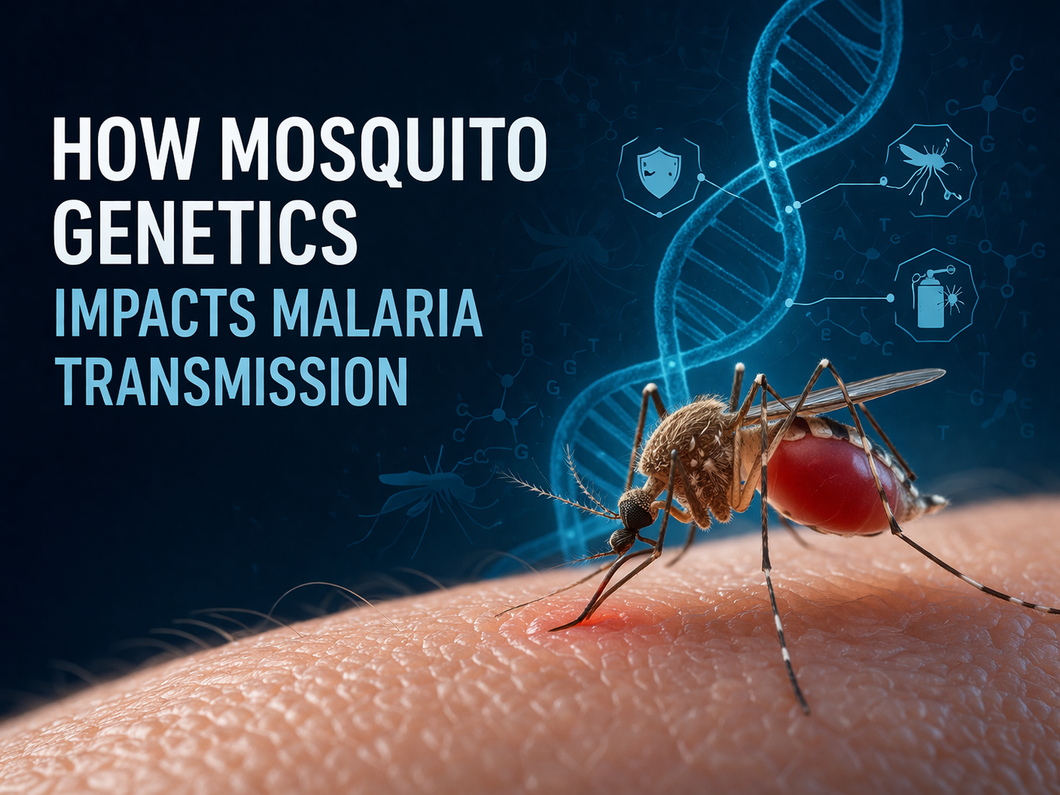
How Mosquito Genetics Impacts Malaria Transmission
How Mosquito Genetics Impacts Malaria Transmission
Introduction: Beyond the Bite
When we think about malaria, the image that often comes to mind is simple: a mosquito bite that transmits a deadly parasite. But beneath that seemingly straightforward interaction lies a complex biological system shaped by evolution, molecular interactions, and critically genetics. Not all mosquitoes are equally capable of transmitting malaria. In fact, whether a mosquito becomes an efficient vector or a biological dead end for the parasite depends largely on its genetic makeup.
Understanding mosquito genetics is no longer a niche academic pursuit. It sits at the heart of modern malaria research, influencing how scientists design interventions, predict outbreaks, and imagine a future where malaria transmission can be interrupted or even eliminated.
A Genetic Specialist: Why Anopheles gambiae Dominates
Among hundreds of mosquito species, only a select few can transmit malaria. Within this elite group, Anopheles gambiae stands out as one of the most effective vectors in the world. Its success is not accidental it is genetically programmed.
Over time, Anopheles gambiae has evolved traits that make it exceptionally well-suited for transmitting Plasmodium parasites. It has a strong preference for feeding on humans, increasing the likelihood of picking up and spreading infection. It also thrives in environments closely associated with human habitation, ensuring constant contact with its host.
But perhaps most importantly, its internal biology encoded in its genome creates a permissive environment for the parasite to survive and develop. Where other mosquito species might destroy the parasite before it can mature, Anopheles gambiae often allows it to complete its lifecycle, turning the mosquito into a highly efficient transmission vehicle.
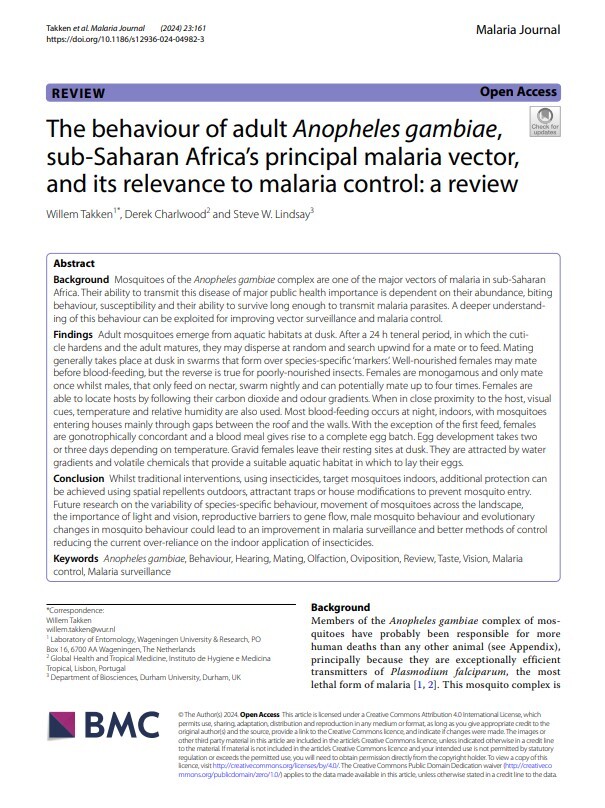
“The mosquito Anopheles gambiae complex, a principal vector of malaria in sub-Saharan Africa, exhibits behavioural traits such as host-seeking, feeding, and survival that directly determine its efficiency in transmitting malaria parasites and thus represent critical targets for control strategies.”
Inside the Mosquito: A Genetic Battlefield
Once a mosquito ingests blood from an infected human, the malaria parasite enters a hostile environment. The mosquito is not a passive carrier it has its own immune system, one that can recognize and attack foreign invaders. Whether the parasite survives this journey depends on a delicate balance between parasite adaptation and mosquito genetics.
Some mosquitoes carry genetic variants that enhance their immune responses. These mosquitoes can effectively suppress or eliminate Plasmodium before it establishes infection. Others, however, possess genetic profiles that are less effective at mounting such defenses. In these individuals, the parasite survives, multiplies, and eventually migrates to the salivary glands ready to infect the next human host.
This variation creates a spectrum of “vector competence” within mosquito populations. In other words, not all mosquitoes are equally dangerous. Genetics determines which ones are.
 Immune Responses to the Sexual Stages of Plasmodium falciparum Parasites
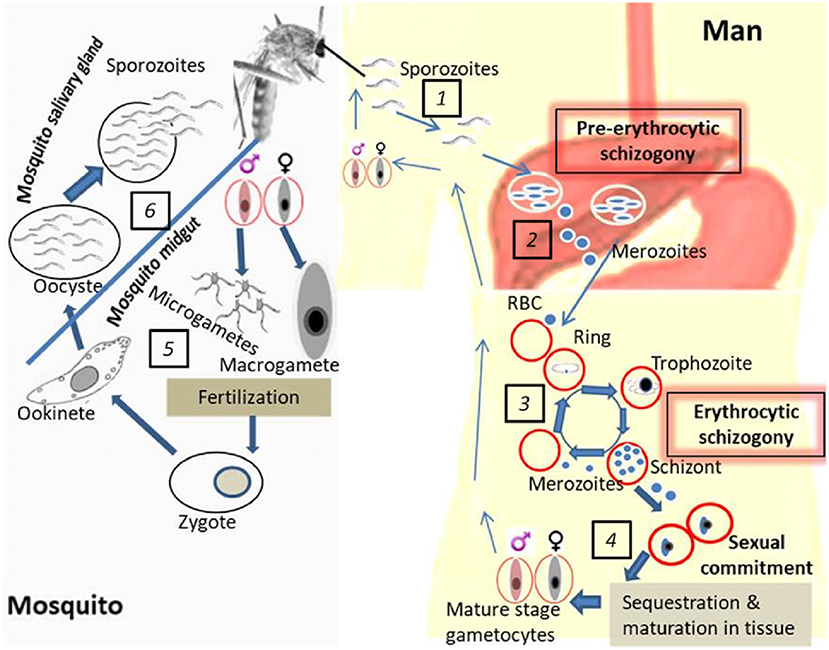
Figure: Life cycle of P. falciparum development in the human host and mosquito vector
Barriers and Gateways: The Role of Mosquito Tissues
For the malaria parasite, surviving inside the mosquito is only the beginning. It must navigate a series of biological barriers, each shaped by the mosquito’s genetic blueprint.
The first major checkpoint is the mosquito’s midgut. Here, the parasite must invade and cross the gut lining a process that depends on specific molecular interactions between parasite proteins and mosquito cell receptors. Genetic differences in these receptors can make the midgut either a barrier or a gateway.
If the parasite succeeds, it continues its journey to the salivary glands. Again, genetics plays a decisive role. Certain mosquito strains produce proteins that facilitate parasite invasion, while others create environments that hinder it. These subtle molecular differences ultimately determine whether the mosquito becomes infectious.
Behavior Written in DNA
Transmission is not only about biology it is also about behavior. And behavior, too, has a genetic foundation.
Some mosquito populations are genetically predisposed to prefer human blood over animal blood. Others are more opportunistic. Some bite primarily at night, while others adapt their feeding times in response to human interventions like bed nets. There are even genetic influences on whether mosquitoes prefer to rest indoors or outdoors.
These behavioral traits have profound implications for malaria transmission. A mosquito that bites humans frequently and avoids control measures is far more dangerous than one that does not. By shaping these behaviors, genetics indirectly determines how often humans come into contact with infected mosquitoes.

The Rising Challenge of Insecticide Resistance
For decades, malaria control has relied heavily on insecticides used in bed nets and indoor spraying to reduce mosquito populations. Initially, these strategies were highly effective. But mosquitoes, like all organisms, evolve.
Across many regions, mosquito populations have developed resistance to commonly used insecticides. This resistance is rooted in genetic changes. Some mosquitoes carry mutations that alter the target sites of insecticides, rendering them ineffective. Others overproduce enzymes that break down toxic compounds before they can cause harm.
The spread of these resistance genes is a stark reminder of evolution in action. As resistant mosquitoes survive and reproduce, they pass these advantageous traits to the next generation, gradually reducing the effectiveness of control measures and allowing malaria transmission to persist.
Genomics: Decoding the Mosquito
The advent of genomic technologies has transformed our understanding of mosquito biology. Scientists can now sequence entire mosquito genomes, compare populations across continents, and identify genetic markers associated with key traits like resistance and vector competence.
This wealth of data has opened new possibilities. Researchers can track how mosquito populations change over time, monitor the spread of resistance genes, and identify vulnerabilities that can be targeted by new interventions.
Bioinformatics plays a crucial role in this process, turning raw sequencing data into meaningful biological insights. Together, genomics and computational analysis provide a powerful lens through which to study malaria transmission at an unprecedented level of detail.
![Fig. 1: Timeline of key events in the development of gene drive systems in mosquitoes [55, 58, 65, 76, 87, 123, 131–138].](https://media.springernature.com/lw685/springer-static/image/art%3A10.1038%2Fs41434-024-00468-8/MediaObjects/41434_2024_468_Fig1_HTML.png)
Figure: Timeline of key events in the development of gene drive systems in mosquitoes
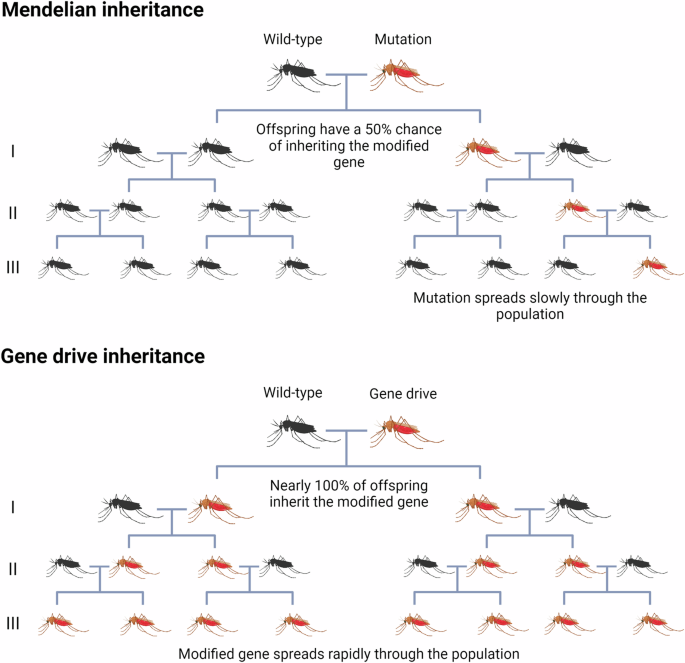
Figure: Comparison of Mendelian versus gene drive inheritance patterns.
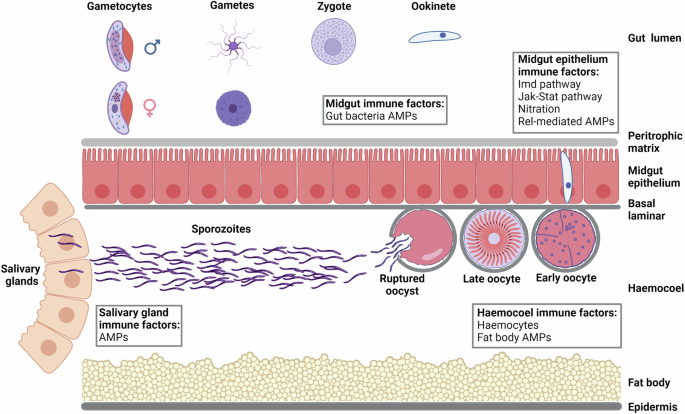
Figure: Stages of potential genetic intervention during the life cycle of the malaria parasite in the mosquito.
Rewriting the Rules: Gene Editing and Future Strategies
Perhaps the most revolutionary development in this field is the emergence of gene editing technologies such as CRISPR. These tools allow scientists to modify mosquito genomes with remarkable precision.
One of the most discussed applications is the concept of gene drives genetic systems designed to spread specific traits rapidly through a population. For example, scientists could introduce genes that make mosquitoes resistant to Plasmodium infection or reduce their ability to reproduce.
In theory, releasing a small number of genetically modified mosquitoes could transform entire populations, dramatically reducing malaria transmission. However, such approaches also raise important ethical and ecological questions. Altering the genetics of wild populations is a powerful intervention, and its long-term consequences must be carefully considered.
From Genes to Global Health
The study of mosquito genetics is not just about understanding insects it is about protecting human lives. Every genetic insight brings us closer to more effective, targeted, and sustainable malaria control strategies.
By integrating genetic data into public health programs, scientists and policymakers can design interventions that are tailored to specific regions and mosquito populations. Instead of one-size-fits-all solutions, we move toward precision vector control guided by the genetic realities of each environment.
Conclusion: A Microscopic Key to a Global Problem
Malaria transmission is often described as a simple cycle between humans and mosquitoes. In reality, it is a complex system shaped by countless genetic interactions. Within the tiny body of a mosquito, a silent battle unfolds one that determines whether the disease spreads or stops.
Mosquito genetics provides a powerful key to understanding this process. As research continues to advance, it offers not only deeper insight but also new tools to break the cycle of transmission. In the fight against malaria, the future may well depend on how effectively we can read and rewrite the genetic code of the mosquito itself.
Recent Posts
-
Genome of Anopheles gambiae: What We Know Today
Genome of Anopheles gambiae: What We Know Today Mosquitoes are among the most dangerous animals on E …24th Mar 2026 -
Analysis of Mosquito Immune Responses
Understanding Mosquito Defense Systems Against Pathogens Introduction Mosquitoes host complex microb …24th Mar 2026 -
CRISPR in Mosquito Control: Future or Risk?
CRISPR in Mosquito Control: Future or Risk? Mosquitoes are more than just annoying summertime pests …24th Mar 2026