
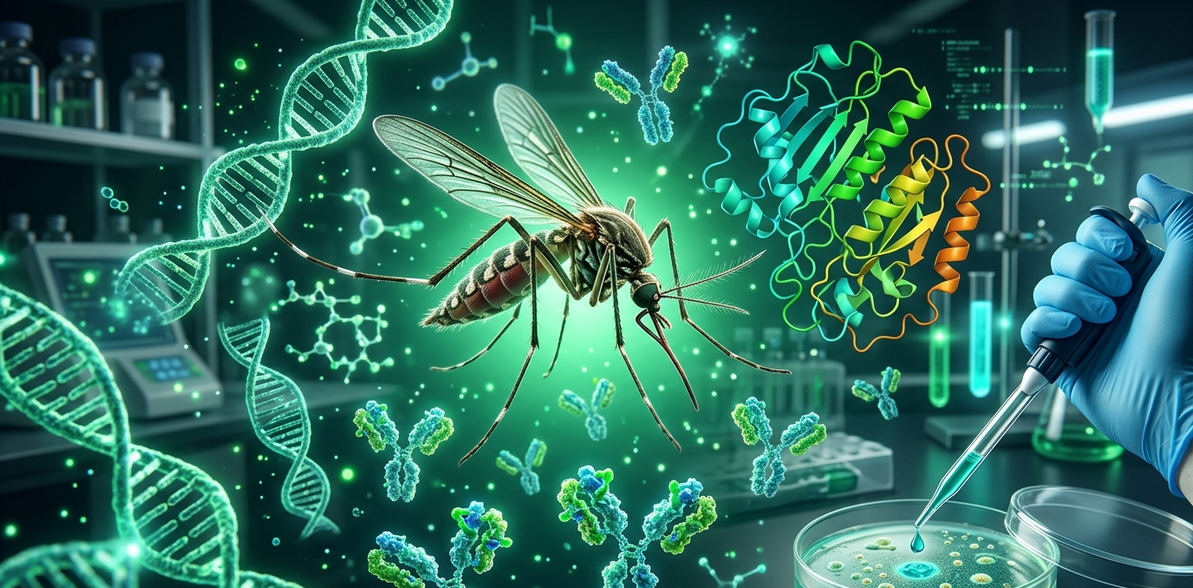
Recombinant Proteins in Vector Biology Research
Recombinant Proteins in Vector Biology Research
Introduction
Vector-borne diseases, including Malaria, Dengue fever, Zika virus infection, and Chikungunya, continue to represent a major global public health burden. Understanding the biology of disease vectors, such as mosquitoes (Anopheles gambiae, Aedes aegypti, and Culex pipiens), is critical to controlling disease transmission. One of the most powerful tools in modern vector biology research is the use of recombinant proteins, which allow scientists to study vector-pathogen interactions at the molecular level, develop diagnostics, and design novel interventions.
What Are Recombinant Proteins?
Recombinant proteins are proteins generated by inserting a gene of interest into a host expression system, such as bacteria, yeast, insect, or mammalian cells. This enables large-scale production of proteins that are otherwise difficult to obtain in sufficient quantities from natural sources.
In vector biology, recombinant proteins are often used to study:
-
Pathogen antigens (e.g., NS1 protein of dengue virus, circumsporozoite protein of Plasmodium sp.)
-
Vector-derived proteins involved in blood feeding, immunity, or pathogen transmission
-
Enzymes and receptors critical for mosquito physiology or pathogen replication
Recombinant protein technology allows researchers to produce highly pure, consistent, and biologically active proteins, which are essential for reliable experiments.
Applications in Vector Biology Research
1. Pathogen-Vector Interaction Studies
Recombinant proteins derived from pathogens or vectors are widely used to dissect molecular interactions that facilitate infection and transmission. For example:
-
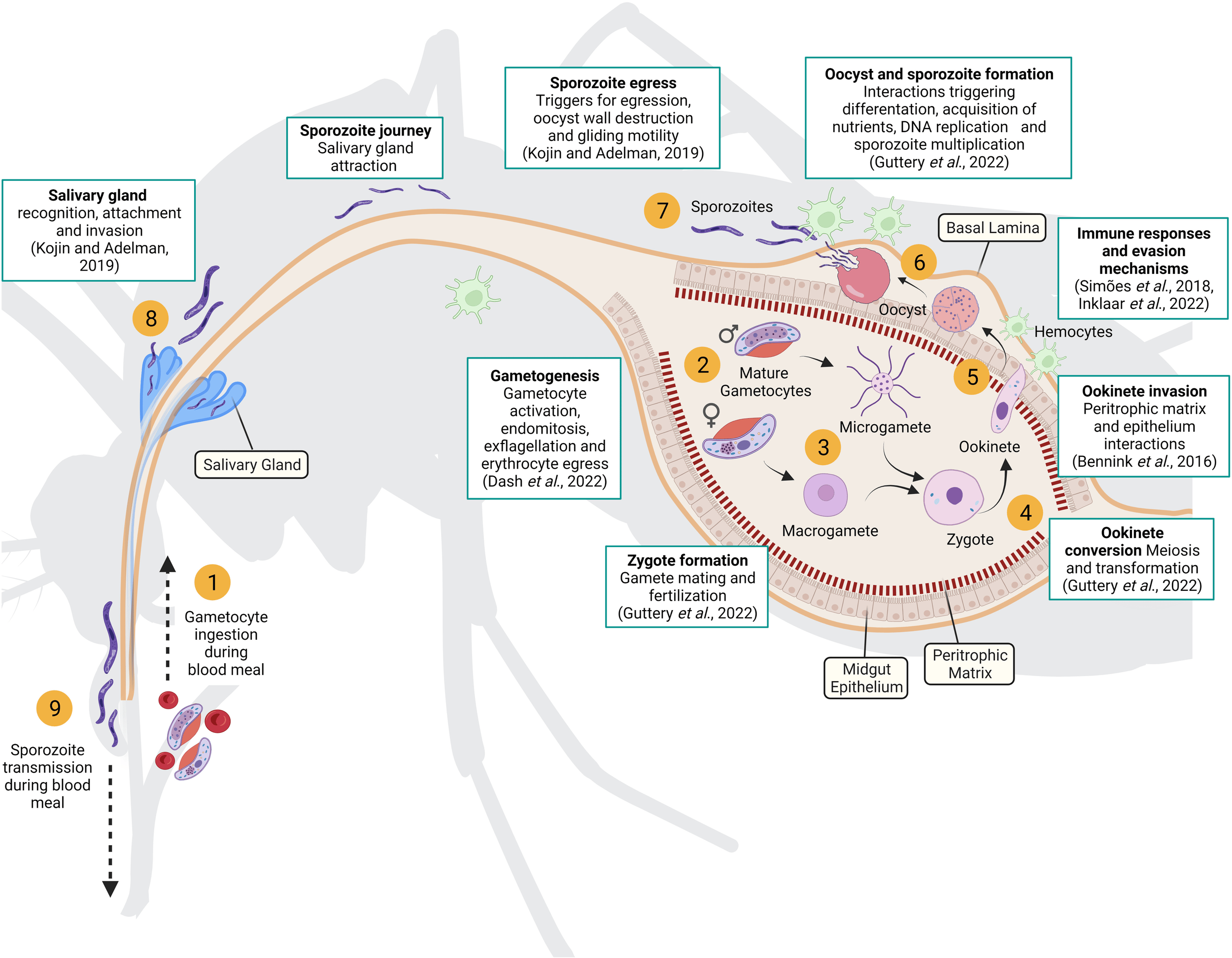
Malaria Research: Recombinant circumsporozoite protein (CSP) from Plasmodium sp. helps study mosquito salivary gland invasion and host immune response.
-
Dengue/Zika Research: Recombinant NS1 or envelope proteins are used to understand viral replication, immune evasion, and endothelial cell interactions.
By using recombinant proteins, scientists can model pathogen-vector interactions without handling live pathogens, improving laboratory safety and reproducibility.
2. Diagnostic Tool Development
Recombinant proteins are the backbone of many serological and immunodiagnostic assays, such as:
-
ELISA Kits: Detect pathogen-specific antibodies in human or animal sera.
-
Rapid Diagnostic Tests (RDTs): Use recombinant antigens for point-of-care detection of dengue, malaria, or Zika infections.
For instance, the NS1 protein of dengue virus is expressed recombinantly and used in ELISA or optical immunosensors to detect infection in early stages. Similarly, recombinant Plasmodium antigens help improve the specificity and sensitivity of malaria diagnostics.
3. Vaccine Research and Development
Recombinant proteins are integral in the development of subunit vaccines for mosquito-borne diseases. Examples include:
-
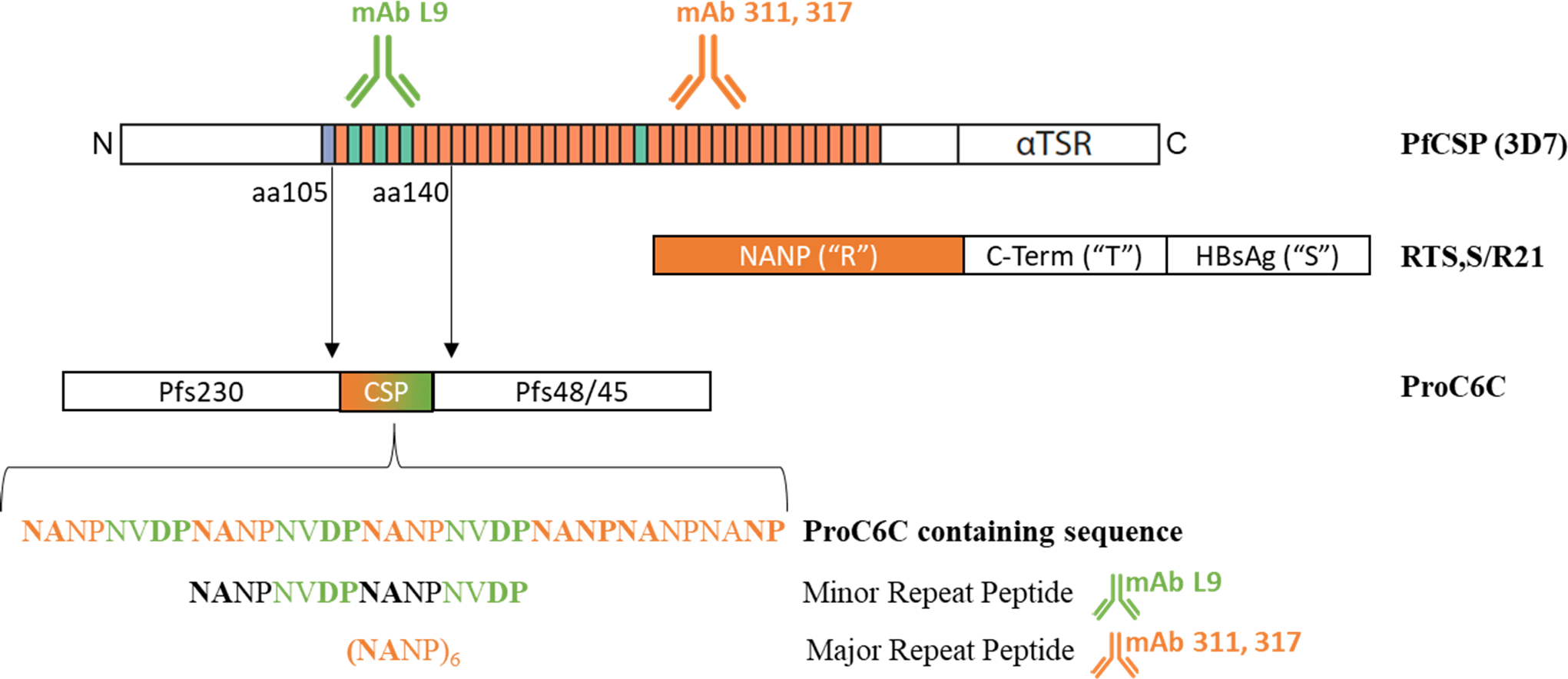
Malaria vaccines: Recombinant CSP and other Plasmodium proteins are tested as vaccine candidates to elicit protective immunity.
-
Dengue and Zika vaccines: Recombinant envelope proteins or NS1 proteins stimulate immune responses without requiring live virus, offering safer alternatives.
These proteins allow precise control over the immune epitopes included in vaccines, reducing the risk of adverse reactions and cross-reactivity.
4. Functional Proteomics and Vector Immunology
Vector biology research increasingly relies on proteomics approaches to study mosquito proteins involved in pathogen transmission. Recombinant vector proteins, such as salivary gland proteins, midgut receptors, or immune effectors, are produced for:
-
Functional characterization of vector molecules
-
Screening for inhibitors that block pathogen transmission
-
Investigating mosquito immune pathways and microbiome interactions
By combining recombinant proteins with high-throughput screening technologies, researchers can identify novel targets for vector control strategies.

Advantages of Using Recombinant Proteins
Recombinant proteins offer multiple advantages in vector biology research:
-
High purity and reproducibility: Reduces variability in experiments
-
Safety: Eliminates the need for live pathogens in many assays
-
Flexibility: Proteins can be engineered with tags or modifications for detection or structural studies
-
Scalability: Large quantities can be produced for diagnostics, vaccine trials, or biochemical assays
These features make recombinant proteins indispensable tools for modern mosquito-borne disease research.
Future Directions
The field of vector biology is moving toward integrated approaches that combine recombinant proteins with:
-
CRISPR gene editing to modify vector susceptibility
-
Multiplex immunoassays for simultaneous pathogen detection
-
Biosensor-based diagnostics for rapid field deployment
Advances in recombinant protein technology are expected to accelerate vaccine development, diagnostic innovation, and vector-targeted interventions, ultimately reducing the burden of mosquito-borne diseases worldwide.
Conclusion
Recombinant proteins serve as versatile tools in vector biology research, enabling scientists to study pathogen-vector interactions, develop sensitive diagnostics, and advance vaccine research. By leveraging recombinant technology, researchers can tackle the complex challenges of mosquito-borne diseases more safely, efficiently, and effectively.
Recent Posts
-
Randomly Amplified Polymorphic DNA (RAPD)
Introduction The analysis of genetic variation at the DNA level has become a fundamental approach in …1st Apr 2026 -
Role of Cytogenetics and Molecular Cytogenetics in Diagnosing Genetic Imbalances
Introduction Over the past five decades, cytogenetics and molecular cytogenetics have transformed t …1st Apr 2026 -
In Situ Hybridization in Cytogenetics
Introduction In situ hybridization (ISH) is a powerful technique used in cytogenetics to detect and …31st Mar 2026