
Global Co-Transmission of paludism and Lymphatic Filariasis by Mosquito Vectors
Introduction
Vector-borne diseases continue to represent a critical global health concern. Among approximately 4,000 identified mosquito species, fewer than 10% function as efficient vectors of human pathogens. Two of the most impactful parasitic infections transmitted by mosquitoes are paludism and lymphatic filariasis (LF).
These diseases are widely distributed across tropical and subtropical regions and frequently involve shared mosquito vectors, particularly Anopheles species. Their widespread prevalence and significant public health impact have positioned them as priority targets for international control and elimination initiatives.
Global Burden and Geographic Distribution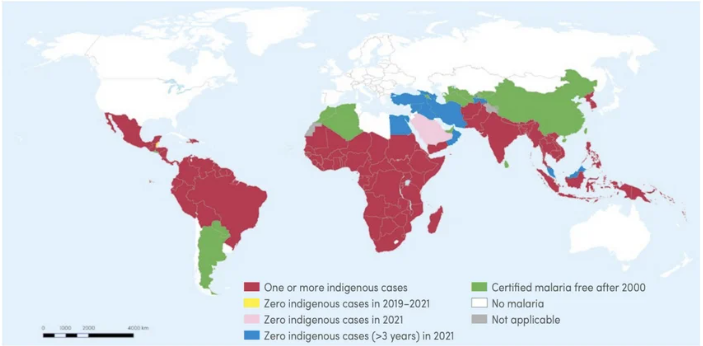
Paludism
Paludism places nearly 3.3 billion individuals at risk worldwide, with an estimated 250 million cases reported annually. The disease is responsible for approximately one million fatalities per year, disproportionately affecting young children and pregnant women.
It remains endemic in over 100 countries, with sub-Saharan Africa experiencing the highest disease burden, accounting for more than 80% of global cases. Control efforts are challenged by:
- Insufficient healthcare infrastructure
- Adverse socioeconomic conditions
- Emergence of antimalarial drug resistance
- Increasing insecticide resistance in vector populations
Lymphatic Filariasis
Lymphatic filariasis is the second most prevalent mosquito-borne parasitic disease, affecting around 128 million individuals across 78 endemic countries.
An estimated 1.3 billion people are at risk of infection, particularly in:
- South and Southeast Asia
- Sub-Saharan Africa
- Western Pacific regions
The nematode Wuchereria bancrofti accounts for nearly 90% of all infections. Although rarely fatal, LF leads to severe chronic manifestations such as:
- Lymphedema
- Elephantiasis
- Long-term disability and social stigmatization
Parasites and Transmission Mechanisms
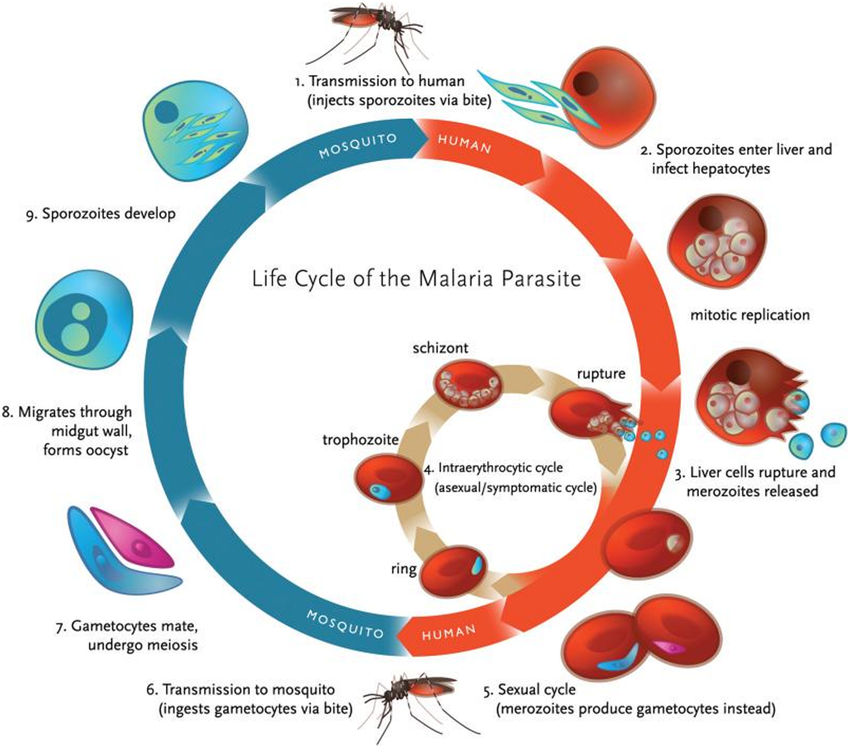
Parasites
It is caused by protozoan parasites of the genus Plasmodium, primarily:
- P. falciparum (most virulent)
- P. vivax
- P. malariae
- P. ovale
Transmission occurs when an infected Anopheles mosquito inoculates parasites into the human host during blood feeding. The parasite undergoes a complex lifecycle involving both mosquito and human hosts.
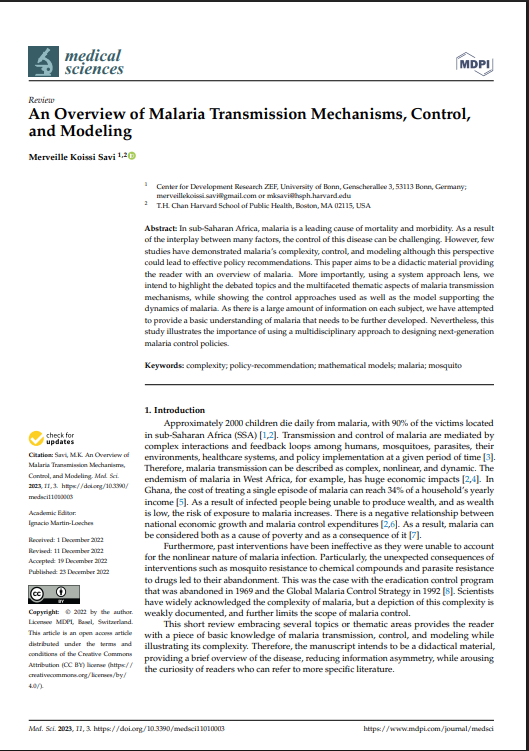
Lymphatic Filariasis Parasites
LF is caused by filarial nematodes, predominantly Wuchereria bancrofti. In contrast to malaria:
- Humans serve as the definitive host
- Mosquitoes act as the intermediate host
Infective larvae are deposited on the skin during a mosquito bite and penetrate through micro-lesions. The parasites develop within the lymphatic system, where they can persist for years and continuously release microfilariae into the bloodstream.
Shared Mosquito Vectors
A major epidemiological link between malaria and LF is their common reliance on mosquito vectors, particularly Anopheles species.
- Approximately 70 Anopheles species are implicated in malaria transmission
- Over 36 species are capable of transmitting both paludism and LF
Additional mosquito genera involved in LF transmission include:
- Culex (primarily urban transmission)
- Aedes and related genera (subperiodic transmission patterns)
This overlap facilitates potential co-transmission, especially in endemic .
Co-Transmission Dynamics
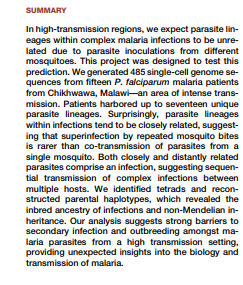
Within Mosquito Vectors
Simultaneous infection of mosquitoes with both parasites is possible but relatively uncommon. Interactions between parasites may:
- Influence developmental processes the vector
- Alter mosquito survival rates and feeding behavior
- Modify overall transmission efficiency
In certain scenarios:
- Filarial infection may enhance parasitar development
- Mixed infections may reduce transmission success due to biological competition
Within Human Hosts
Concurrent infections in humans are less frequent than anticipated. Observations indicate:
- Reduced the parasite density in individuals harboring filarial infections
- Potential immunological interactions affecting disease progression
Environmental variables such as seasonality and climatic conditions also play a significant role in shaping co-transmission patterns.
Diagnostic Approaches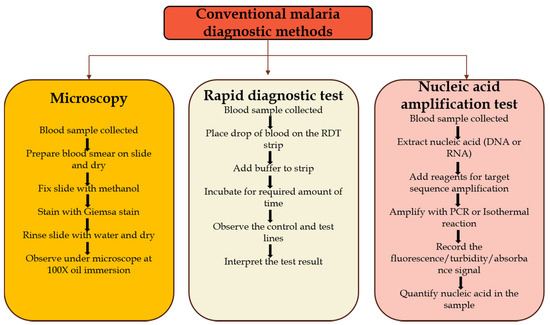
Conventional Methods
- Microscopic examination of stained blood smears
- Dissection of mosquito specimens
- Concentration-based diagnostic techniques
While reliable, these approaches are:
- Labor-intensive
- Time-consuming
- Dependent on specialized expertise
Advanced Diagnostic Technologies
Modern diagnostic advancements include:
- Immunological assays (ELISA, rapid diagnostic tests)
- Molecular techniques such as PCR
These methods provide:
- Enhanced sensitivity and specificity
- Detection of low-intensity infections
- Capability for vector surveillance via molecular xenomonitoring
Multiplex PCR assays enable simultaneous detection of malaria and filarial parasites within a single sample.
Environmental and Climatic Determinants
Transmission dynamics of both diseases are strongly influenced by environmental conditions:
- Temperature and humidity regulate parasite development
- Deforestation and land-use changes modify vector habitats
- Agricultural expansion can increase vector proliferation
Climatic variations may:
- Accelerate parasite development cycles
- Extend vector lifespan
- Expand transmission
Regional Overview
Africa
- Highest global burden of both diseases
- Extensive co-endemic
- Dominant vectors: Anopheles gambiae and Anopheles funestus
Asia
- Largest number of LF cases worldwide
- High vector diversity and complex transmission patterns
- Frequent co-transmission in rural
Western Pacific
- Elevated LF prevalence in island populations
- Diverse ecological transmission systems
- Strong environmental influence
Americas
- Lower overall prevalence
- LF primarily urban
- Malaria more widespread in tropical regions
Control and Elimination Strategies
Global Initiatives
Two major international programs address these diseases:
- Roll Back Malaria (RBM)
- Global Programme to Eliminate Lymphatic Filariasis (GPELF)
LF is considered potentially eradicable due to:
- Absence of significant animal reservoirs
- Availability of effective pharmacological interventions
Integrated Control Strategies
Given the shared vectors, integrated control approaches are highly advantageous:
Vector Management
- Insecticide-treated nets (ITNs)
- Indoor residual spraying (IRS)
- Environmental and habitat management
Medical Interventions
- Mass drug administration (MDA) for LF
- Antimalarial treatment protocols
This combined strategy:
- Reduces transmission of both diseases simultaneously
- Enhances cost-effectiveness
- Limits the risk of resurgence
Challenges and Limitations
Despite progress, several constraints persist:
- Emergence of drug and insecticide resistance
- Incomplete treatment coverage
- Population mobility and migration
- Environmental and ecological changes
Conclusion
Malaria and lymphatic filariasis continue to impose a significant global health burden, particularly in tropical regions. Their shared transmission through mosquito vectors underscores the importance of coordinated and integrated control strategies.
Advancements in surveillance, diagnostics, and vector ecology combined with sustained global efforts are essential to achieve long-term reduction and eventual elimination of these diseases.
Recent Posts
-
Randomly Amplified Polymorphic DNA (RAPD)
Introduction The analysis of genetic variation at the DNA level has become a fundamental approach in …1st Apr 2026 -
Role of Cytogenetics and Molecular Cytogenetics in Diagnosing Genetic Imbalances
Introduction Over the past five decades, cytogenetics and molecular cytogenetics have transformed t …1st Apr 2026 -
In Situ Hybridization in Cytogenetics
Introduction In situ hybridization (ISH) is a powerful technique used in cytogenetics to detect and …31st Mar 2026