
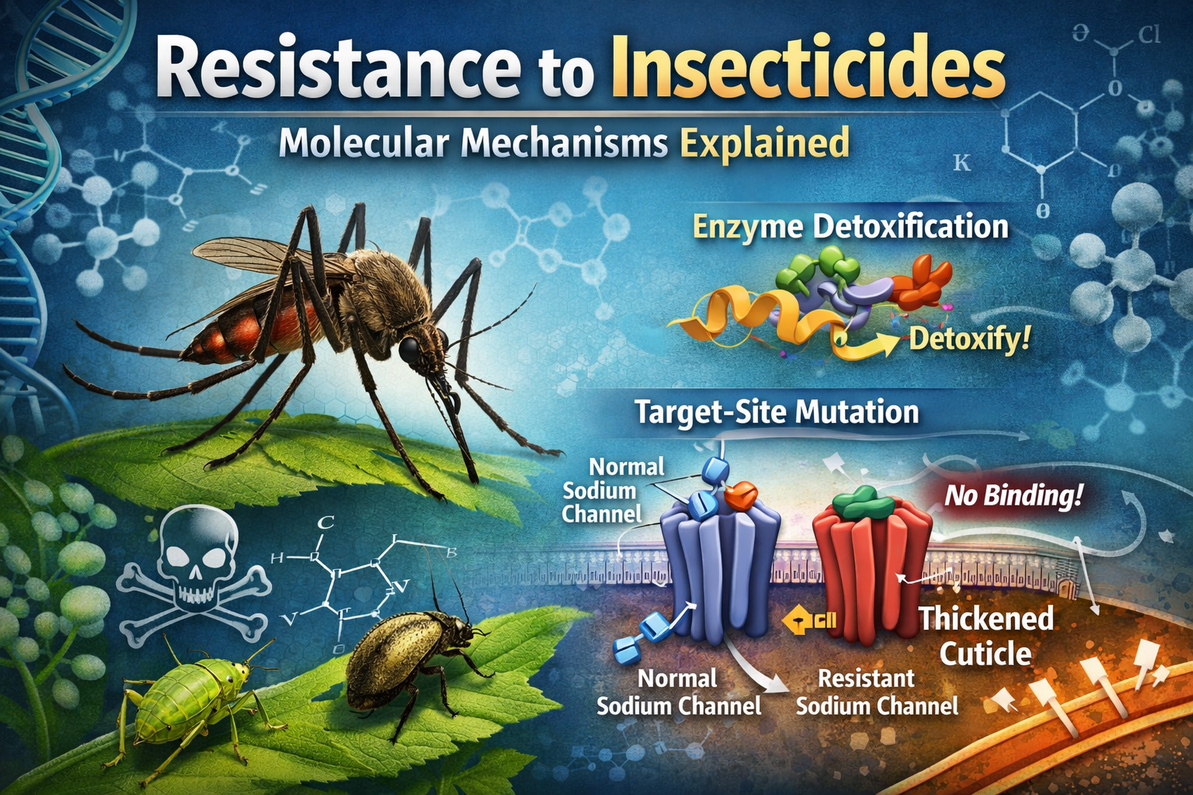
Resistance to Insecticides: Molecular Mechanisms Explained
Resistance to Insecticides: Molecular Mechanisms Explained
Insecticides have been one of humanity’s most important tools in fighting insect-borne diseases and protecting crops. From mosquitoes that spread malaria and dengue to pests that damage food supplies, chemical control has saved countless lives and livelihoods. But over time, many insects have developed resistance, making these chemicals less effective. Understanding how this resistance works at the molecular level is key for scientists and public health professionals to design smarter strategies.
What Is Insecticide Resistance?
Insecticide resistance occurs when a population of insects survives doses of a chemical that would normally be lethal. Resistance is not a sudden change it evolves gradually through natural selection. Individuals with genetic traits that help them survive an insecticide pass those traits to their offspring. Over generations, these traits become more common, and the insecticide loses its effectiveness.
Resistance can occur in different ways: by breaking down the chemical faster, changing the target site the chemical acts on, or even avoiding the chemical altogether. At the molecular level, these mechanisms are fascinating and diverse.

Insect Resistance to Insecticides: Causes, Mechanisms, and Exploring Potential Solutions
1. Metabolic Resistance: Detoxifying the Insecticide
One of the most common forms of resistance is metabolic resistance. Here, insects produce higher levels or more efficient versions of enzymes that detoxify insecticides before they can do harm.
Three main enzyme families are involved:
-
Cytochrome P450 monooxygenases (CYPs): These enzymes add oxygen atoms to insecticides, making them easier to break down and eliminate.
-
Glutathione S-transferases (GSTs): GSTs attach a small molecule called glutathione to the insecticide, neutralizing its toxic effects.
-
Carboxylesterases (COEs): These enzymes break chemical bonds in the insecticide, rendering it harmless.
Metabolic resistance is like the insect carrying a molecular “antidote” that destroys the chemical before it can affect its nervous system.
2. Target-Site Resistance: Changing the Insecticide’s Target
Some insecticides are designed to bind to specific proteins in an insect’s nervous system. If these proteins mutate slightly, the insecticide can no longer attach effectively, and the insect survives.
For example:
-
Acetylcholinesterase mutations: Organophosphates and carbamates target this enzyme, which is crucial for nerve function. Mutations reduce the insecticide’s ability to bind.
-
Voltage-gated sodium channel mutations (kdr mutations): Pyrethroids act on these channels, and mutations prevent the insecticide from keeping the channels open, allowing the insect’s nerves to function normally.
-
GABA receptor mutations: Some insecticides target these inhibitory neurotransmitter receptors. Mutations can block the insecticide without affecting the receptor’s normal role.
Target-site resistance is like changing the locks on a door the chemical key no longer fits.

Figure : Conceptual illustration of insecticide resistance in insects.
3. Behavioral Resistance: Avoiding the Chemical
Not all resistance happens inside the insect’s body. Some insects evolve behaviors that help them avoid insecticides:
-
Avoidance of treated surfaces: Mosquitoes may feed or rest in areas not treated with insecticide.
-
Changes in feeding times: Some species may bite during times when humans are less likely to use repellents or nets.
Behavioral resistance doesn’t involve molecular changes directly, but it often develops alongside metabolic or target-site mechanisms.
4. Cuticle Resistance: The Protective Barrier
Insects can also evolve thicker or chemically altered cuticles (the outer exoskeleton). A modified cuticle slows the absorption of insecticides, giving detoxifying enzymes more time to act. At the molecular level, this involves changes in proteins and lipids that make up the cuticle.
Why Understanding Molecular Mechanisms Matters
Knowing exactly how insects resist insecticides helps scientists design better control strategies:
-
Rotating insecticides with different modes of action to reduce selection pressure.
-
Developing synergists chemicals that block detoxifying enzymes.
-
Designing new molecules that bypass target-site mutations.
Without this knowledge, resistance can spread silently, rendering public health and agricultural efforts ineffective.
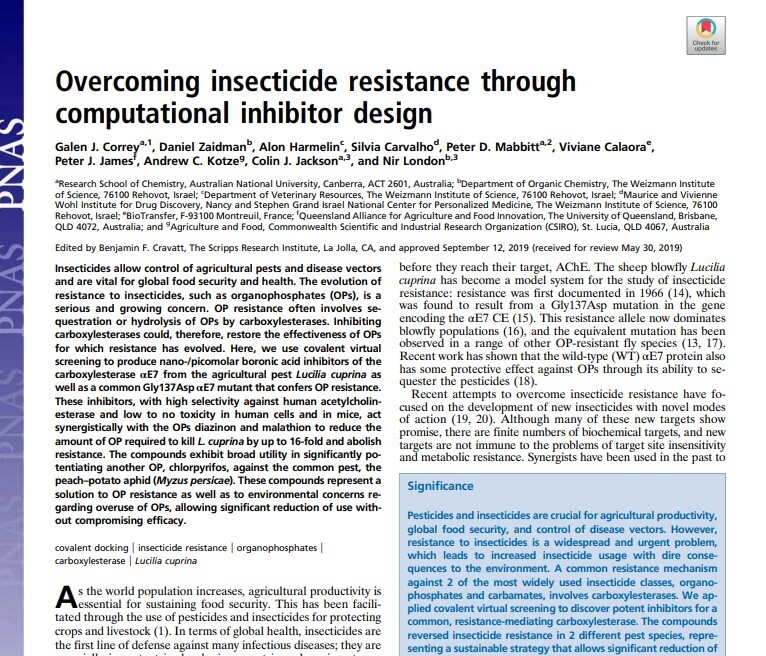
Conclusion
Insecticide resistance is a complex and evolving challenge. At the molecular level, insects use detoxifying enzymes, mutations in target proteins, behavioral changes, and protective barriers to survive chemical treatments. Understanding these mechanisms is critical for sustainable pest management, effective disease control, and protecting global food security.
By studying the tiny molecular changes in insects, scientists can stay one step ahead, designing strategies that keep insecticides effective while reducing the risk of resistance spreading.
Recent Posts
-

Genome of Anopheles gambiae: What We Know Today
Genome of Anopheles gambiae: What We Know Today Mosquitoes are among the most dangerous animals on E …24th Mar 2026 -
Analysis of Mosquito Immune Responses
Understanding Mosquito Defense Systems Against Pathogens Introduction Mosquitoes host complex microb …24th Mar 2026 -
CRISPR in Mosquito Control: Future or Risk?
CRISPR in Mosquito Control: Future or Risk? Mosquitoes are more than just annoying summertime pests …24th Mar 2026